
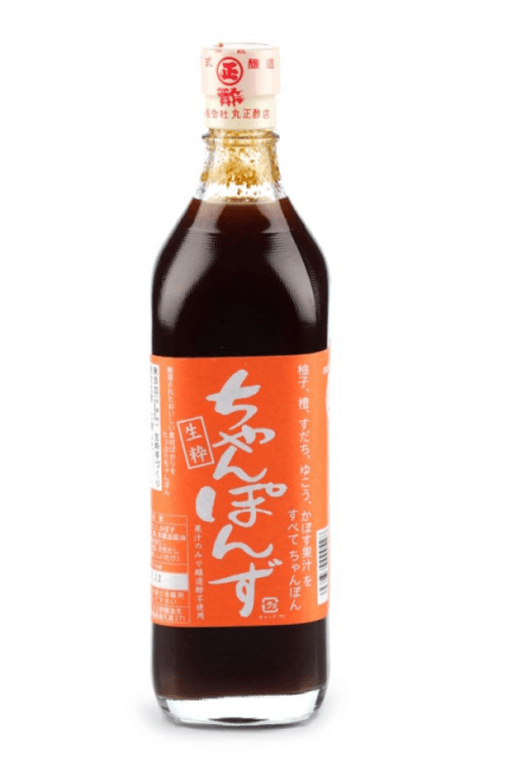
Chanponzu
inhoud 700 mlArt. nr. 770336Champonzu is de echte traditionele ponzu saus. We gebruiken een ruime hoeveelheid sap van citrusvruchten (yuzu, daidai, yuko, kabosu en sudachi) en voegen daar wat bouillon aan toe (bonito, kombu-zeewier en shiitake-paddenstoel). • Ingrediënten: citrusvruchten (yuzu, daidai, yuko, kabosu en sudachi), Japanse abrikoos, honjozo shoyu (sojasaus, bevat sojabonen en tarwe), hon mirin, amazake, natuurlijke bouillon (bonito, kombu-zeewier en shiitake-paddenstoel) • Bewaren: Bewaar op een koele, donkere plaats en vermijd direct zonlicht. (In de koelkast na opening.)
Product specificaties
| Artikel nummer | 770336 |
| Land van herkomst | Japan |
Allergenen info

gluten

soja
Kan bevatten
Omschrijving
Seiji Kosaka, the 3rd president of the company, who is a very skilled craftsman as well, offers prayers to our family alter, blows conch shell, and beats wooden clappers when he enters our vinegar cellar. It helps him to develop better concentration of his mind. We consider that vinegar is not just a liquid but a living liquid, and being calm is very important to talk with the nature.
There are 12 casks made of Japanese cedar in the cellar: with no artificial light but sunlight through the windows. It remains exactly the same as it was when the company was founded. The casks are made of 2-meter-high and 5-cenntimeter-thick old Kumano-sugi (cedar), and each of them has been named after past grand champions of sumo since the generation of Seiji’s grandfather who was a sumo wrestlers fan. Every cask is covered with woven mat of wild rice leaves and kept at a proper temperature for fermentation. Marusho Vinegar is fermented and aged for more than 90 to 500 days, and Seiji goes through every cask with a flashlight in his hand listening to vinegar breathing every night.古式醸造へのこだわり
水へのこだわり
Quality soft water and rice malt are necessary for good vinegar. We use subsoil water from the Kumano Mountains, it is also the water source of Nachi Falls. The well in our yard contains delicious and mild tasting soft water, and the water temperature is around 16 degrees Celsius through the year. We have brought it to our factory and used it generously to make vinegar since the Edo period (around 1800). 水へのこだわり
素材へのこだわり
素材へのこだわりThe rice for our vinegar is grown in rice fields of ours or others with less pesticide. We use authentic, high quality ingredients: shiitake mushroom, bonito soup stock, kombu seaweed, honjozo shoyu (soy sauce), and hon mirin (Japanese sweet cooking sake) for seasoning vinegar like ponzu (citrus-based sauce) or vinegar for sushi; and local citrus (e.g., daidai or yuzu) for fruit vinegar. All products are preservative free, and no other chemicals are used.
We select the finest raw material for all of our products.
木桶に対するこだわり
When you ferment vinegar in wooden casks, about five percent of it would escape into the air through the wood. So it is good for economic efficiency to use tanks made of stainless-steel, enamel, or plastic. However we have not adopted them because the aroma was inferior to that fermented in wooden casks.
Around 1965, a machine, which could ferment ingredients and make vinegar within 24 hours, was introduced to Japan from Germany. While many major companies had started to use the ferment machine, Seiji decided that he continues to make vinegar in the traditional way, though it would be more costly. Now we have many fans all over Japan who have been attracted to his handmade vinegar. 木桶に対するこだわり